By Rio Branham
I want to start by talking about a favorite book of mine. The Alchemist by Paulo Cuelho. It’s a story about a boy named Santiago who decides to leave all he has and all he’s known behind to follow a dream. Without knowing much about what will come of his pursuit, he follows a thread, a feeling that there is something to gain in this pilgrimage he’s about to undertake.
I’ll try to avoid spoiling the ending if you haven’t read it, but when the boy reaches his destination he realizes that the purpose of his journey was not at all what he expected, but that the journey itself was essential in helping him achieve his dream. What I take from this story is that each of us have our own paths to take and how they are rarely what we expect or want, but there is always much to gain along the way.
After leaving the religion I was raised in I felt pretty lost. I spent a lot of time searching for a worldview or predetermined path that I could follow to find the ultimate truth that I didn’t find in my previous religion. I was brought up believing that there is always a right answer, and only one right way to go through life. Anything less felt like failure. I thought that my life would be meaningless if I didn’t have the ultimate guiding star to follow and help me make all the right choices in life. This compulsion to find answers followed me even after leaving my previous worldview behind. But it didn’t take long to realize that this was a losing battle. I probably wasn’t going to figure out the universal truth to explain all things. In fact, I had concluded that it probably didn’t exist. Which was disheartening to say the least.
This was the state I was in when I came to Buddhism and our fellowship. I was trying to feel ok with the realization that I wouldn’t be able to figure it all out. I felt like it was probably time to just give up on spiritual pursuits of any kind. So when I came to this Sangha for the first time I was quite skeptical. Though I did have an appreciation for some general buddhist concepts that I had stumbled across, I was wary of spiritual communities. Particularly of any group that professed to have the answers, the “right way”. I’m happy to say that’s not what I found here.
One of the concepts that I latched on to was the idea of mindfulness and presence. I liked the idea of using meditation to focus on what’s happening in the moment and trying to let go of anxiety and worry about the past and future. I found that religions that have strict guidelines only amplified my tendency towards anxiety and worry. But present moment awareness felt like an antidote to constantly looking outside of myself for some external guide or answer to whatever problem I was dealing with in my life at the moment. This was attractive to me for a few reasons. First, it was practical. I’m an anxious person and when I meditate consistently I do feel better able to handle stress and anxiety. But the bigger reason that I felt comfortable approaching these ideas was that it was not inherently metaphysical and didn’t feel necessarily spiritual in nature. That was important to me at the time.
I was pretty averse to any ideology or flavor of spirituality that made me feel like I had to believe something about myself or the universe that didn’t really make sense to me. I was very attached to logic and reason. Anything that challenged that made me immediately want to run in the opposite direction. But because these initial ideas didn’t require me to stretch reality as I understood it, they left the door open to explore further. So I kept coming and listening. I started to realize that Buddhism in general and our fellowship specifically gives a lot of latitude for personal interpretation of concepts. There didn’t seem to be a strict cosmological worldview or even necessarily any supernatural ideas that I had to accept to participate in Buddhism. And I kept finding value in the dharma. The stories and concepts and community kept resonating with me.
The point of this talk isn’t about my path specifically, some of you may have similar experiences, but many of you may have had a completely different journey to get here today. Maybe you view Amida Buddha as a savior type figure and believe in a literal Pure Land that you will enter when you die, or maybe you just like meditating and having a community of people who you can share space and ideas with. Each reason for being here is valid and welcome. And the very fact that Buddhism is so adaptable and flexible is the reason why I am still here.
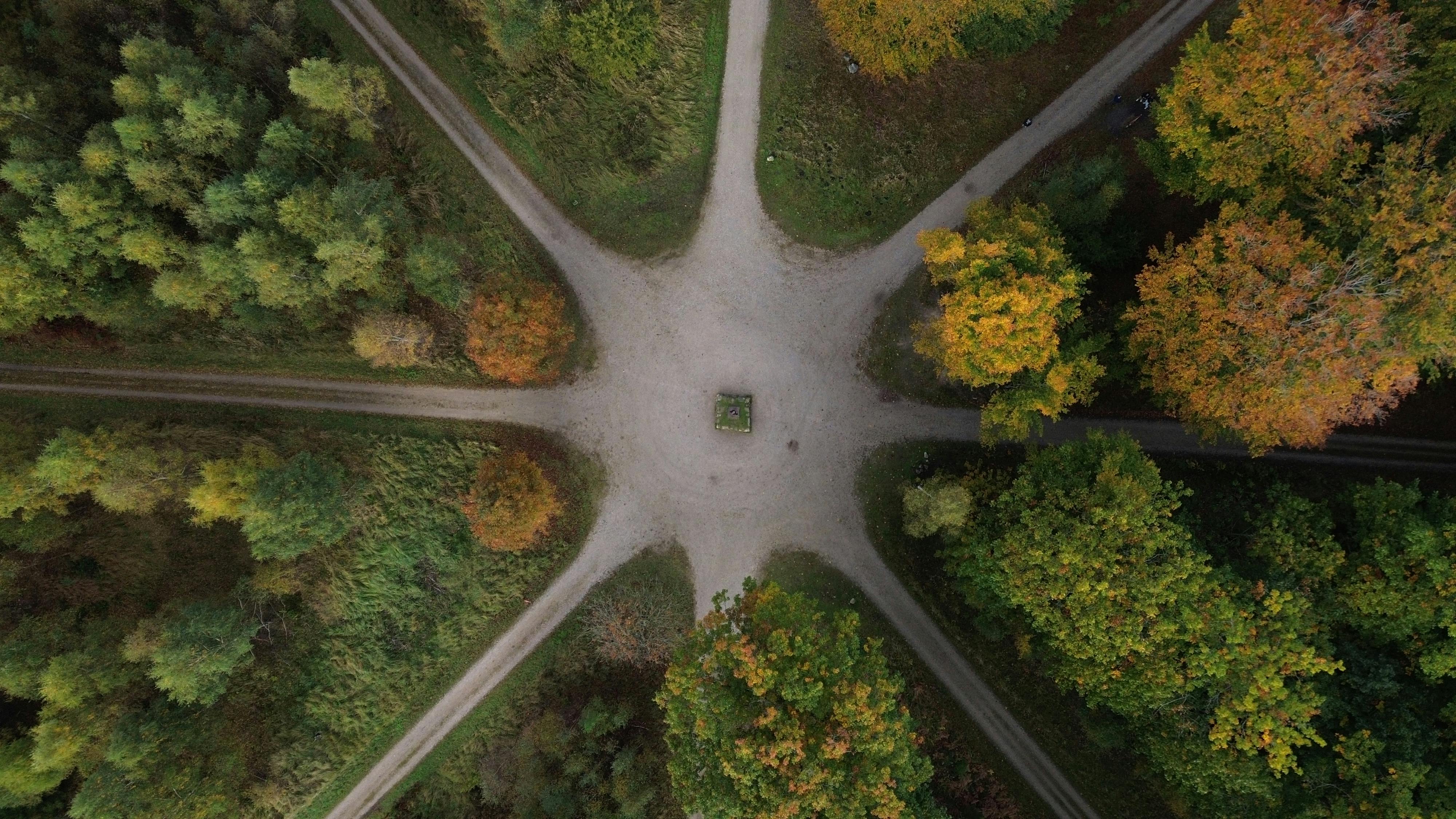
Like it mentions in the Pali Canon, there are 84,000 paths to awakening. The worldview that I find in Buddhism can accommodate my own specific situation and needs even if those needs are very different from the person sitting next to me. Like the boy in the book, we all have our own path. I see Buddhism as the field in which all of those paths cross. It is not one path but a collection of stories and ideas and people that can help support us wherever our individual path may take us.
As I’ve learned more about the history of Buddhism I started to see how it would take different forms as it moved from place to place. Often it would adopt the deities and rituals of the local spiritual tradition. But there remained some underlying threads. In my opinion this adaptation did not diminish the “original” Buddhism, but rather made it more relevant to the people in any given place and time.
This is what I appreciate about Christopher Sensei and his efforts with this fellowship. We’re not trying to be fundamentalist, we’re not trying to be a type of Buddhism that existed hundreds or thousands of years ago. It’s very hard to even know exactly what that was let alone adapt to our day to day lives. And as he often says, “Come as you are, go as you are.” This is not just a sarcastic comment saying that if you don’t like what we have to say then you can leave, I think it’s a genuine part of the practice. Which is to be able to know what works for you and be willing to go find it. Whether that’s here or somewhere else.
I think In our modern society we have developed an optimization complex. I feel this a lot. Everything needs to be the most correct, the most accurate, the best, oldest, most spiritual. In my experience this mindset is more often a hindrance than helpful. If instead we take literally the idea that there are actually 84,000 (or 8 billion) paths to awakening then we can stop worrying about the ultimate truth and focus on what works for us. What, in this moment, feels aligned with our experience and needs?
I love the quote from Ram Dass, “we’re all just walking each other home.” or as it says in our practice manual,
“I offer you my hand, my heart, my mind I ask only this, that you remain by my side until both of us awaken to our own true nature“
The point of a community like ours is to walk with each other side by side. Not one in front of the other in a single file where we are able to prescribe what someone who is “behind” us needs to make it to wherever we are because we know so much more than them. We’re all students here as Sensei says. I certainly am, I don’t know shit. Nobody can tell you how to find enlightenment, it is an individual journey but we can take that journey together.
This idea of an individual practice makes mindfulness and presence practice very valuable. The more we are able to be mindful the more we are able to see what it is that WE need from our practice. It may not be what anyone else needs, or what any podcast might suggest, but if we can learn to trust that we must walk our own path then we may actually get somewhere and learn a few things along the way that are relevant to our own lives, rather than just collecting generic ideas and facts that we can regurgitate to sound smart and like we know a lot about Buddhism. For me it was helpful to be given permission to practice authentically. Not to follow a script or do things that don’t make sense to me just because you’re supposed to, that didn’t work for me. That invitation to come as you are was the opening gate that said, “Welcome to Choose-your-own-adventure-Buddhism.” The magic in that is that it can and will continue to evolve. Like Rev. Gyomay Kubose Says, “The Dharma is continuously unfolding.” Each step of the way is a chance to continue to practice mindfulness and check in with ourselves to see what is most useful for me right now in the flow of now.
I am at a place in my spirituality now that I did not think I would be a few years ago. I came to this fellowship a skeptic and a nihilist. The thought of me being up here would have been absurd. It still is absurd. That doesn’t mean I’m really spiritually evolved, it just means that I’ve taken paths I didn’t think I would take, and that I’m open to things I didn’t think I would be open to, simply by following the thread of what was applicable and approachable for me in the moment.
When I was so focused on finding the “right” thing I would get stuck and fall back into unhelpful patterns because there was no way to know what was right and I was constantly undermining my own belief in myself. I’m still at the very beginning, but I am less harsh with myself, I am more accepting of others. And a friend told me the other day that I have less of a temper, which I didn’t think I had much of one before, but that’s always nice. Buddhism is not about delusions of grandeur, it’s about micro adjustments that have slow and long term effects on how we view ourselves and the world and help us live a life a little less full of unnecessary suffering.
Another book I read that has been insightful in my spiritual journey is Soul Boom by Rainn Wilson’s (Dwight Shrute’s). He’s not Buddhist, he is part of the Bahai’ faith. But a lot of what he talks about aligns with Buddhism in my opinion. He talks about the modern trend towards secularism as, “throwing the spiritual baby out with the religious bathwater.” I’m not saying there’s anything wrong with secularism, but what he’s saying is that often when people leave a formal religion (often for great reasons) they tend to leave behind any of the potential benefits from having a spiritual life. And that’s understandable, it can be triggering to have anything that feels even remotely similar to a religion or path that we have left behind. This was certainly the case for me, and it was a necessary part of my journey. The key here is in the nuance. Just as important as identifying what works for you is identifying what doesn’t work for you. Maybe sitting meditation is not helpful for you, that’s ok, maybe your practice is gratitude, or deep listening, or service, or being in nature, or a type of art or creative practice that is meaningful to you. You get to pick your path.
Now one might accuse me of advocating for buffet style Buddhism. Take what you want, leave what’s hard or uncomfortable or weird. And that that approach might not offer much in terms of being challenged to grow. What I’m not saying is to simply build an echo chamber of ideas that are comfy and beliefs you like, but rather by building a practice of awareness, you can know when it’s time to confront an idea that you haven’t wanted to in the past. Or to let go of a belief that you’ve held on to for too long. You are allowed and it’s even necessary to forge your own path and sometimes change your mind.
One of my favorite Buddhist parables is that of the raft. The Buddha taught that once you cross a river using a raft you need to put the raft down since it is no longer of use and it will hinder you in making further progress. This can be applied to any number of things. Maybe a specific practice has run its course in your life, or a particular community, or teaching, or friendship, or even Buddhism altogether. The point is not to be dogmatic and hold on to any particular view of the world and say, “I’ve found the answer that will always be the answer and will never change.” Because we’re always changing. You may even realize that you have to go back the way you came and cross the river again using a different raft and head the other direction. This may be confusing or feel like you are backtracking, but there is wisdom in the cliche, “It’s about the journey, not the destination.”
Although Santiago’s journey turned out different than he expected, it was not a failure. He comes to see that what he was seeking was available to him from the start, but he would not have been able to understand it or appreciate it if he did not take the journey he took with all the starts and stops and what seemed like failures and missteps along the way. I have gone through periods of being very angry about the way my life has played out being raised in a strict religion where I was not able to have the young adulthood that I may have wanted. But in my more mindful moments I can see that I wouldn’t be where I am today if it weren’t for that path. I’m beginning to be grateful for all the causes and conditions that have led me here. I’ve been able to start finding that proverbial baby that I may have thrown out with the bathwater when I left religion and spirituality behind.
My invitation to you all is to take stock of your life, see what you might be able to let in, or let go of on the next step of your journey, and trust that those next steps will be meaningful even if It’s not yet clear how.
Nature is a great teacher of the dharma for me, especially water. And just like how many rivers flow into the same ocean through their own path, we too can all walk our own path towards the same oneness.
Namu Amida Butsu
 Everyday Nembutsu